Las Vegas, NV
Angeles pool service
Pool cleaning · Pool repair
CITY DIRECTORY / NV
Explore Pool Builders with a recorded location in Las Vegas, Nevada. Contact a business directly to confirm its service area.
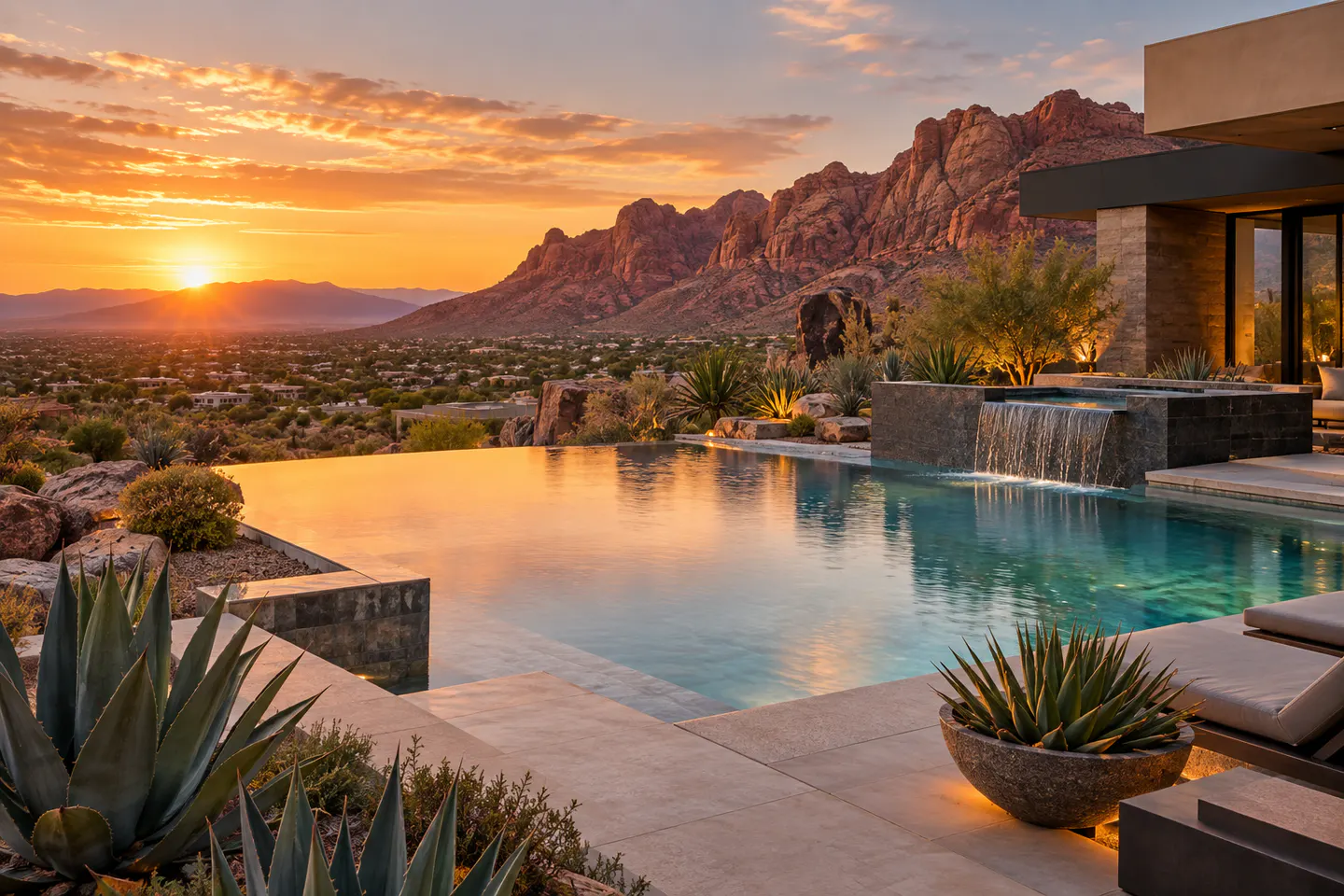
Featured city #1 in Nevada · Population 679,817 (2025).
Before comparing Pool Builders
For Nevada properties, avoid treating a statewide search as a local shortlist. Discuss your actual location, expected swimming season, shade preferences, and site access with businesses that confirm coverage.
Bring the property address, access photographs, intended swimming season, and the features that matter most. Ask the permitting authority and each builder which site questions must be resolved before a concept or early price becomes a buildable proposal.
Relevant starting points
Pool Builders matching this location and specialty
Alphabetical orderPool cleaning · Pool repair
The local picture
Use this city page to start a local shortlist, then broaden your search to other recorded locations in Nevada if needed. Categories describe source records, and a business can appear in more than one specialty.
Pool cleaning is one of the prominent source specialties represented here. Use the available company website, phone, and map details to check current information and ask for independently verifiable examples of comparable work. If your project needs a different specialty, use the category links below or broaden the location search.
Property and climate planning
This location sits within a broad pattern of hot, dry and high-evaporation conditions. That regional context helps organize questions, but it does not establish the soil, drainage, hazard exposure, rules, or buildability of a particular property.
Long periods of heat can extend use, but sun exposure, water temperature, evaporation, shade, deck comfort, and cover handling deserve early attention. Ask how the proposed orientation, finish, landscaping, and equipment respond to the actual yard.
Water and energy planning should cover fill water, evaporation control, pump scheduling, heating or cooling expectations, and any current utility restrictions. A saltwater system is a sanitation method, not a pool construction type, and it does not eliminate water testing or equipment compatibility checks.
Desert-region properties may involve expansive soils, hard excavation, slope, wash or drainage constraints, and intense runoff during storms. These are possibilities to investigate—not assumptions about a particular lot. Ask who evaluates soil, drainage, and structural recommendations and how findings change the price.
Ask the builder to mark known utilities, access widths, staging, spoil removal, drainage routes, equipment clearances, trees, easements, and unresolved conditions on the site plan. A quote should say which observations are preliminary and which rely on a survey, utility locate, engineering, or another specialist.
Compact plunge pools can reduce the water footprint but still require access, equipment, barriers, utilities, and a complete installed scope. Compare fiberglass delivery access, concrete design flexibility, vinyl system support, and above-ground or semi-inground limitations against the property rather than climate alone.
Keep structural type separate from sanitation and features. Saltwater chlorination, heating, automation, covers, spas, tanning ledges, infinity edges, and water features can be paired with more than one structure, subject to design and manufacturer limitations. Compare usable internal dimensions, complete installation, service access, finish care, and warranty responsibility.
Begin with the building or planning authority responsible for the exact address. Confirm permits, inspections, setbacks, easements, barriers and gates, electrical work, drainage, and any water or utility requirements. State, county, municipal, utility, and property-specific rules can overlap. HOA approval is a separate private process and does not replace government approval.
Ask who prepares documents, pays fees, schedules inspections, responds to corrections, and supplies final records. Do not rely on a directory category or proposal heading as proof of licensing. Verify the contracting entity and any required credentials with the relevant authority.
Las Vegas is included among Nevada’s featured locations using a 2025 Census population estimate of 679,817. Population is useful for geographic navigation, but it does not establish lot size, yard access, tenure, household composition, budget, or demand for a particular pool type.
Use a measured survey or reliable property documents for boundaries, structures, easements, and utilities. In denser settings, test equipment access and compact layouts early; on a larger-looking property, still verify usable area, setbacks, drainage, septic or well constraints, and circulation rather than assuming flexibility.
Ask every bidder to separate excavation assumptions, structure, interior finish, equipment, utilities, deck, shade, drainage, barriers, permits, startup, and restoration. Water features and infinity edges need explicit hydraulic, structural, energy, and maintenance scopes.
Pool Builders Hub does not publish an unsupported local price range. Compare like-for-like scopes covering design, engineering if required, excavation, structure, finish, equipment, utilities, access, decking, drainage, barriers, permits, inspections, cleanup, startup, landscaping restoration, allowances, exclusions, tax, payment milestones, changes, and warranty support.
Looking farther afield? Browse all states and confirm service availability directly.
Clear answers
Useful context before your next step.
The page uses published source records with a recorded location in Las Vegas, NV. A recorded address does not prove a service area, current availability, licensing, or suitability for a project, so confirm those points directly.
Pool cleaning, Pool repair. These are source labels, not a verified inventory of every service a company offers. Ask whether it handles your pool type and project scope.
A recorded location does not establish a service radius. Ask the Pool Builder to confirm coverage of your exact address, travel arrangements, and whether it provides the kind of construction or ongoing service you need.
Start with the building or planning office responsible for your property. Ask which local departments and documents apply to the proposed work, and confirm in writing which coordination tasks your contractor includes.
Most states use 2025 Census incorporated-place population estimates. Rhode Island uses city and town estimates; Hawaii uses 2020 Census designated places. These are location rankings, not rankings of Pool Builders or service quality.
Ask for the pool structure, dimensions, depths, finishes, equipment models, access and excavation assumptions, utilities, decking, drainage, barriers, permits, cleanup, startup, exclusions, allowances, payment milestones, change process, and warranty contacts in writing.
Design revisions, authority review, inspections, utility coordination, product lead times, weather, access limits, and unexpected site conditions can affect the sequence. Ask each builder for a schedule that identifies assumptions rather than only a target completion date.
Compare usable dimensions, design flexibility, delivery and construction access, the complete installed scope, finish or liner care, warranty responsibility, and the availability of experienced local installation and service—not material labels alone.
Collect equipment models, manuals, programmed settings, finish-care instructions, water-testing guidance, warranty contacts, inspection records, and a maintenance schedule. Clarify which support comes from the builder, manufacturer, or a separate service company.
Long periods of heat can extend use, but sun exposure, water temperature, evaporation, shade, deck comfort, and cover handling deserve early attention. Ask how the proposed orientation, finish, landscaping, and equipment respond to the actual yard.
Desert-region properties may involve expansive soils, hard excavation, slope, wash or drainage constraints, and intense runoff during storms. These are possibilities to investigate—not assumptions about a particular lot. Ask who evaluates soil, drainage, and structural recommendations and how findings change the price.
No. Saltwater usually describes a chlorine-generation treatment system. Concrete, fiberglass, vinyl liner, and above-ground describe structural approaches; plunge, lap, infinity-edge, and pool-and-spa describe size, purpose, or design features. Compare each decision separately.
No. Community-level population or housing data can frame questions about density and access, but it does not describe an individual property, household budget, or preference. Measure the site and write a project-specific brief.
The linked Census, NOAA, CPSC, and government-finder resources were checked on September 25, 2026. Confirm current requirements with the authority responsible for the property before design or construction.