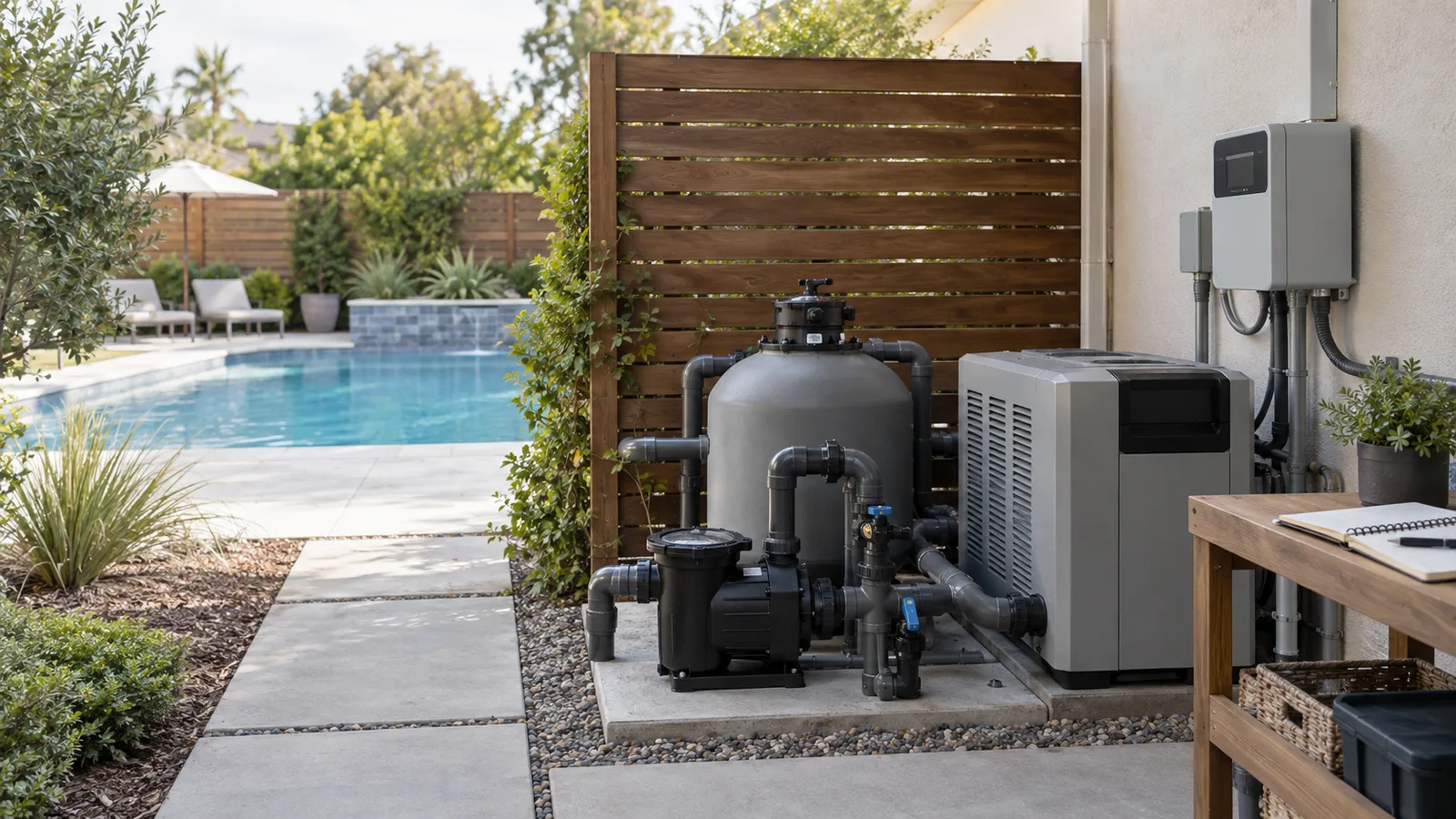
Collect an equipment record
Ask for model numbers, serial numbers, manuals, warranty documents, and service contacts for the installed components. Keep a copy of the final scope and available drawings with them. Label photographs of the equipment area so you can identify components later without guessing. Clarify which registrations are complete and which actions remain yours. Store a digital copy somewhere you can find it during a service call.
Request a practical demonstration
Ask the responsible professional to explain normal operation, controls, routine observations, and situations that require help. Take notes in your own words and repeat key steps back to confirm your understanding. Do not experiment with unfamiliar equipment to fill gaps in the demonstration. If the pool includes connected controls, confirm that the correct person has account access and knows where to obtain support.
Record outstanding items
Walk through the agreed scope and list incomplete or unresolved work with photographs where helpful. Identify who is responsible, the next action, and the process for confirming completion. Keep cosmetic observations separate from operational concerns so neither disappears in a long undifferentiated list. If there is disagreement about contractual completion or payment, seek appropriate advice; a general checklist cannot determine legal obligations for your agreement.
Set up the first maintenance routine
Discuss the instructions specific to the finish, equipment, and water treatment system. Establish who will handle service and how records will be kept. Ask whether a follow-up visit is included and what it should cover. Keep emergency and support information accessible to the people responsible for the property. A successful handover leaves you with a clear next step when a question arises, rather than a collection of unlabeled documents.
Test a normal operating day before closeout
Walk through starting and stopping each relevant system with the installer: circulation, cleaning, heating, lighting, water features and controls. Note which valves are normally open, how to read alarms, and who to call if the system does not behave as demonstrated. Label and photograph equipment while the explanation is fresh.
Keep a written punch list for incomplete items, the responsible party and the resolution date. Separate a cosmetic item from anything affecting safety or operation. Retain final approvals and warranty documents alongside the equipment record.
Take this to your next conversation
- Collect equipment identities and warranties.
- Document outstanding work with owners and next steps.
- Agree on the first maintenance and follow-up plan.
Further reading
Official sources provide additional context. The planning framework and questions above are our editorial synthesis.
Put your research to work.
Explore pool builders or start with your location. Confirm services and suitability directly with the business.