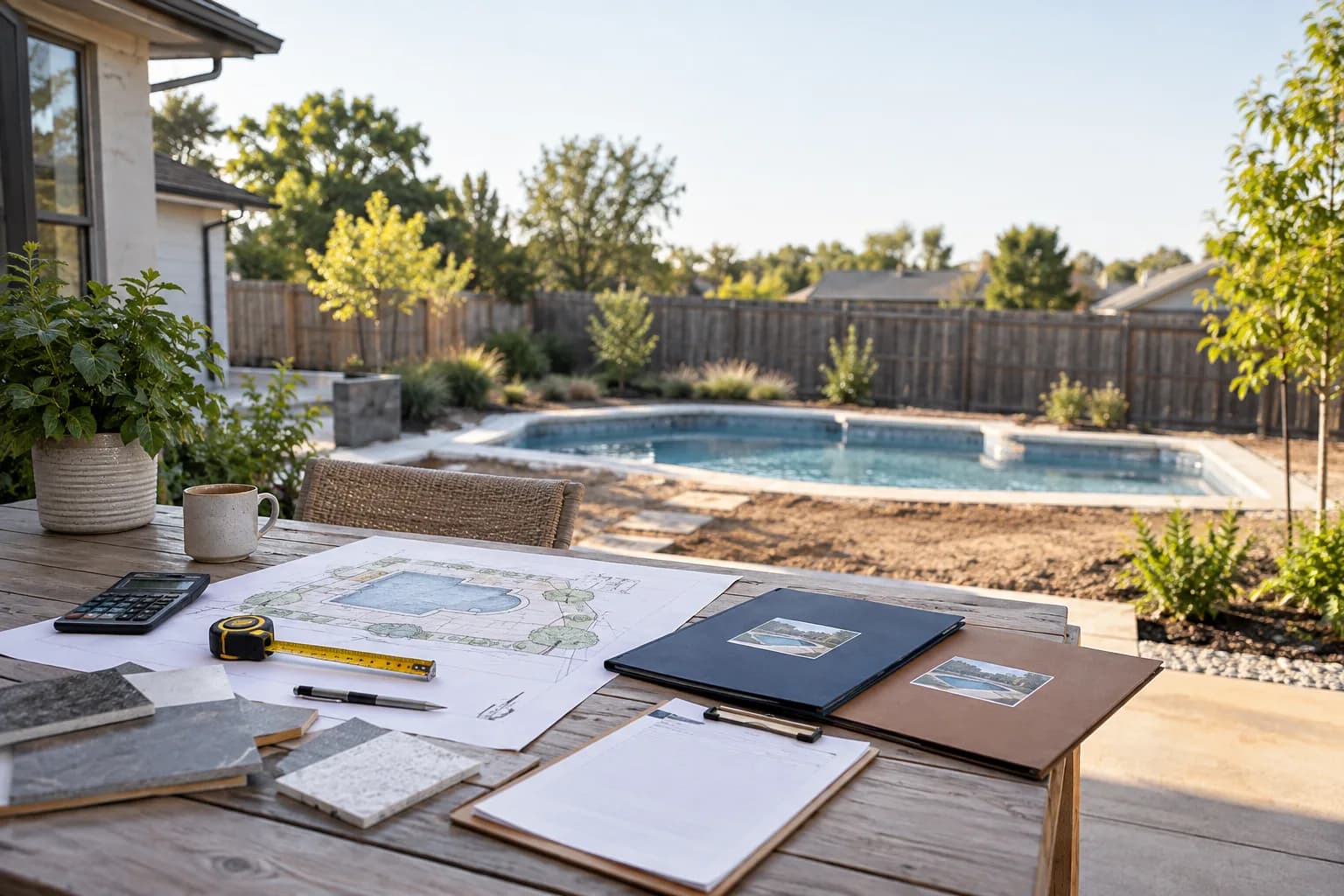
Define the finished result
Write down what “finished” means before collecting numbers. Does the project include a path from the house, drainage work, a place to store a cover, landscaping repairs, and equipment screening? These details may sit outside a headline pool price. Sketch where furniture, gates, bins, and maintenance access will go. A budget attached to a complete layout is easier to discuss than a figure attached only to pool length and width.
Divide the budget into work packages
Use four groups: the pool itself, the surrounding site, supporting services, and owner-selected extras. Put design and coordination responsibilities in the relevant group rather than assuming they are free. Ask each business to identify exclusions. Keep a separate list of work that another trade will carry out, including who coordinates it. This avoids treating a missing item as a saving and makes it easier to change optional elements without losing essential work.
Plan for decisions that arrive later
Some information becomes clearer only after design development or site investigation. Ask which parts of the budget remain provisional, what will resolve them, and when that information is expected. Maintain a decision log with a responsible person and due date. Keep a contingency appropriate to the actual unresolved issues, discussed with your professional team. An unexplained round number is less useful than a list of the uncertainties it is intended to cover.
Include ownership from the beginning
Create a second budget for service, supplies, energy, seasonal work, and eventual replacement of components. Ask which activities you intend to handle yourself and which you will purchase. Request an explanation of the operating assumptions behind any cost estimate: season, water temperature, equipment schedule, and local rates. The purpose is not to predict every future bill. It is to make sure the installation you choose fits the time and attention you want to devote to it.
Build a complete cost worksheet
Use rows for design, approvals, excavation, pool structure, finish, equipment, utility work, barriers, surrounding surfaces, drainage, landscaping repair, startup and ongoing ownership. Mark included, excluded, allowance or unknown for each builder. A national average cannot price access, ground conditions and local requirements at your property.
For ongoing cost, ask about the proposed pump operating schedule, heating assumptions, water care, covers, cleaning and expected service items. Request property-specific assumptions from the Pool Builders you are comparing rather than projecting a generic monthly number.
Keep contingency tied to uncertainty
List known unknowns: buried utilities, limited machinery access, drainage questions or a yet-to-be-selected finish. Ask what investigation can reduce each uncertainty before construction. Keep discretionary upgrades in a separate column so they do not consume funds reserved for site problems.
Take this to your next conversation
- Define the complete backyard scope.
- Track unresolved allowances and site questions.
- Make a separate ownership-cost worksheet.
Further reading
Official sources provide additional context. The planning framework and questions above are our editorial synthesis.
Put your research to work.
Explore pool builders or start with your location. Confirm services and suitability directly with the business.