Define the season and temperature goal
Describe when the pool will be used, who will use it, the desired water temperature, and how quickly it needs to recover after cool weather. A heater selected without those assumptions cannot provide a meaningful operating-cost discussion. Exposure, wind, shade, water features, and night temperatures all affect heat loss.
Ask for a property-specific operating scenario rather than a national monthly figure. Include local energy rates, expected run time, cover routine, and the relationship between circulation and heating.
Compare heater types as installed systems
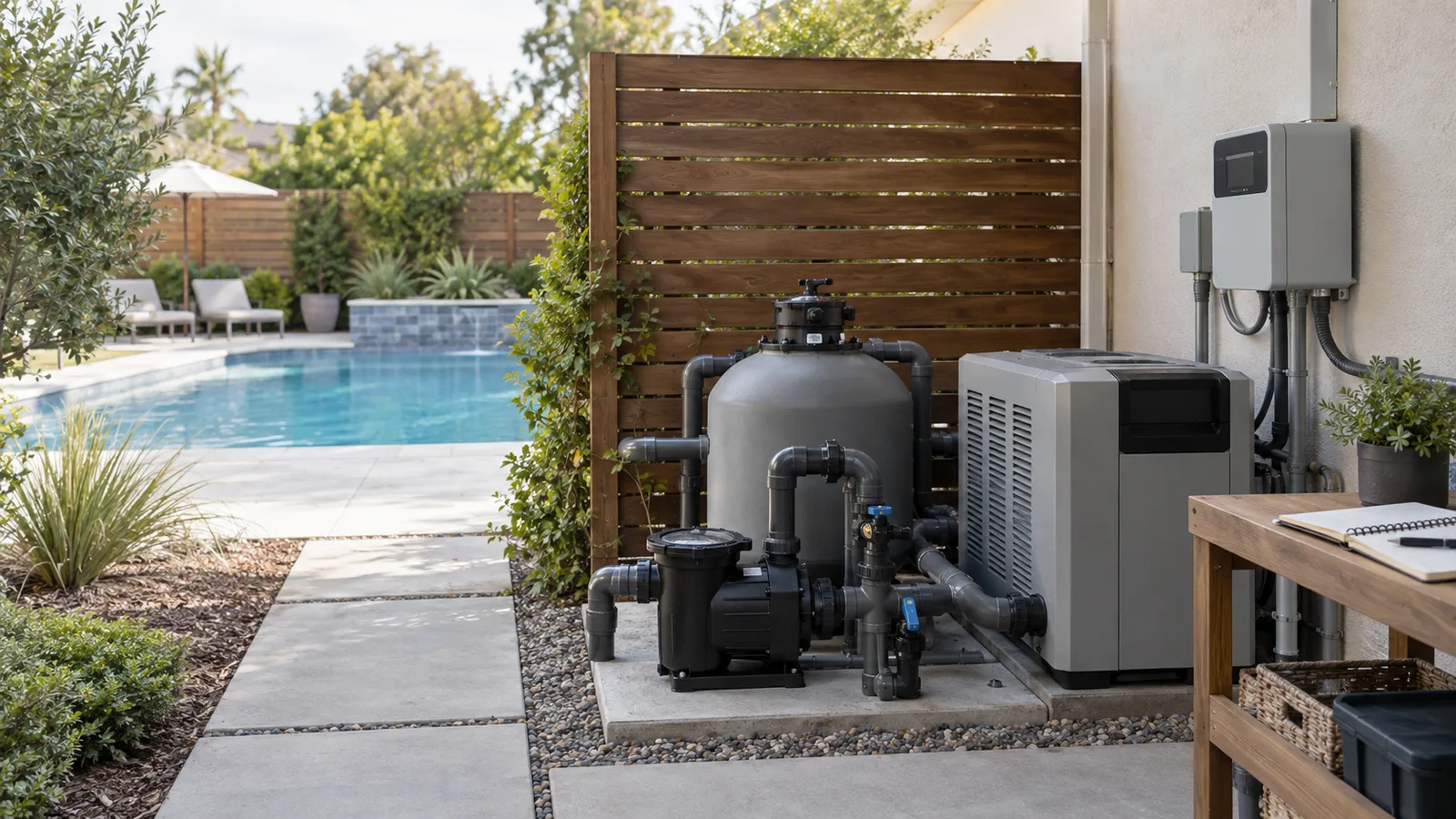
Gas, heat-pump, solar, and other approaches have different site, utility, climate, control, and maintenance considerations. Compare the exact proposed model, certified performance information, electrical or fuel work, plumbing changes, controls, clearances, condensate or drainage needs, commissioning, and service availability.
A product rating is not the same as performance in the finished yard. Ask the designer or installer to document the assumptions used and explain how the heater interacts with the pump, filter, automation, spa, and water features.
Treat the cover as part of the plan
A correctly selected and consistently used cover can reduce evaporation and help retain heat. Compare cover type, storage, handling, compatibility with the pool shape and water treatment, and whether it is intended as a safety cover. A thermal or debris cover should not be represented as a safety barrier unless it is specifically designed and approved for that function.
Make room for the cover and roller in the layout. Ask who supplies, installs, demonstrates, and services the system, and how it affects the deck or coping details.
Plan seasonal care and handover
Where freezing or long shutdown periods are relevant, obtain pool-specific winterisation and reopening instructions from qualified local professionals and product manufacturers. Where pools operate year-round, define routine testing, cleaning, equipment inspection, and response to severe weather or power interruption.
At handover, record model and serial numbers, programmed schedules, valve positions, normal readings, owner tasks, service contacts, and warranty routes. Review the plan when usage, landscaping, rates, or equipment changes.