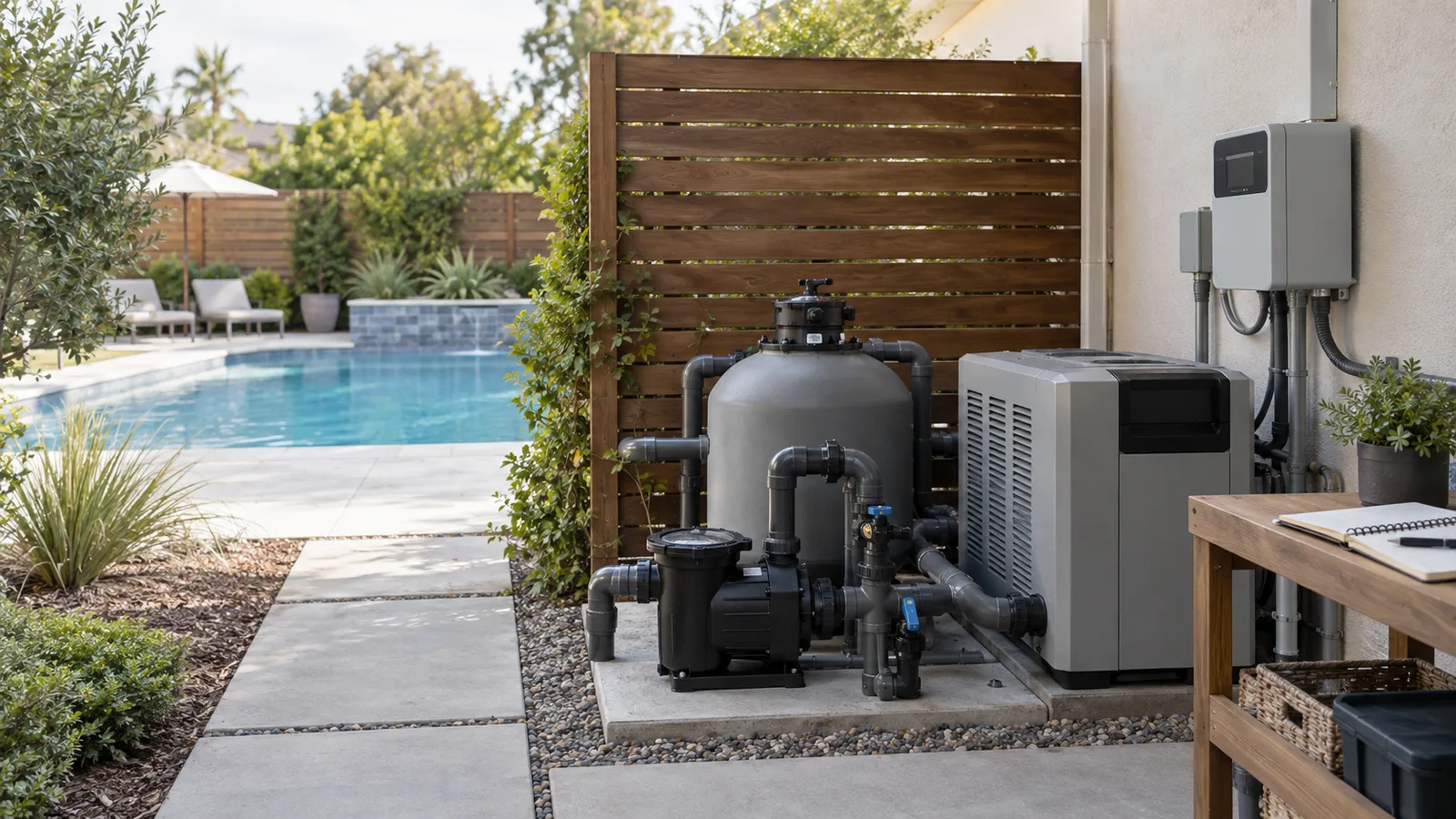
Start with the pool and operating goals
Describe the pool volume and features, desired swim season, water-care method, noise concerns, equipment-pad location, and how you expect to control the system. Share existing model numbers if this is an upgrade. A new pool and a pump replacement are different jobs: one allows the equipment plan to be designed together; the other must account for existing pipes, electrical supply, filter, heater and controls.
Ask the designer or installer to explain the intended operating modes. Circulation, cleaning equipment, water features and heating may have different flow needs. Avoid choosing a pump by a single horsepower number or a filter by a product photograph.
Understand pump and filtration choices
A variable-speed pump can run at different settings for different tasks. The U.S. Department of Energy has documented potential energy savings at lower operating speeds, but the actual result depends on the installed system and schedule. Ask what speed and duration the installer proposes for filtration, cleaning, and any water feature, and how these settings will be commissioned.
For the filter, ask which type and model are proposed, what routine cleaning or media replacement entails, and how the equipment location provides safe maintenance access. Confirm that valves, pipework and controls support the proposed plan. A high-efficiency product cannot compensate for an unexplained installation.
Treat heating as a separate decision
Define the target use: extend a shoulder season, maintain a frequent swim temperature, or warm the pool occasionally. Ask the supplier to explain available heater options for the climate and energy supply, expected operating assumptions, covers, installation requirements and controls. A published equipment rating alone is not an operating-cost estimate for your property.
Request the exact product model and an explanation of where it will be placed, what utilities it needs, and how it interacts with the rest of the system. Check whether electrical, gas or other specialist work is included in the proposal.
Compare a complete installed and supported system
Place each proposal in a table: pump, filter, heater, controls, valves, plumbing changes, electrical work, commissioning, training, product warranty and labor warranty. Mark each line included, excluded or unclear. Ask who owns compatibility and who will respond if one component does not work with another.
At handover, get product manuals, serial numbers, programmed settings, maintenance instructions, warranty contacts and a demonstration. Photograph the pad and label the main valves. Keep this record for the first service call or later upgrade.
Take this to your next conversation
- Record existing equipment models and installation photos.
- List the functions the system must support.
- Ask for exact models and an operating schedule.
- Compare utilities, plumbing, controls and commissioning scope.
- Keep manuals, settings and warranty contacts after installation.
Further reading
- U.S. Department of Energy: Dedicated-Purpose Pool Pumps ↗
- DOE Measure Guide: Replacing Single-Speed Pool Pumps ↗
Official sources provide additional context. The planning framework and questions above are our editorial synthesis.
Put your research to work.
Explore pool supplies or start with your location. Confirm services and suitability directly with the business.