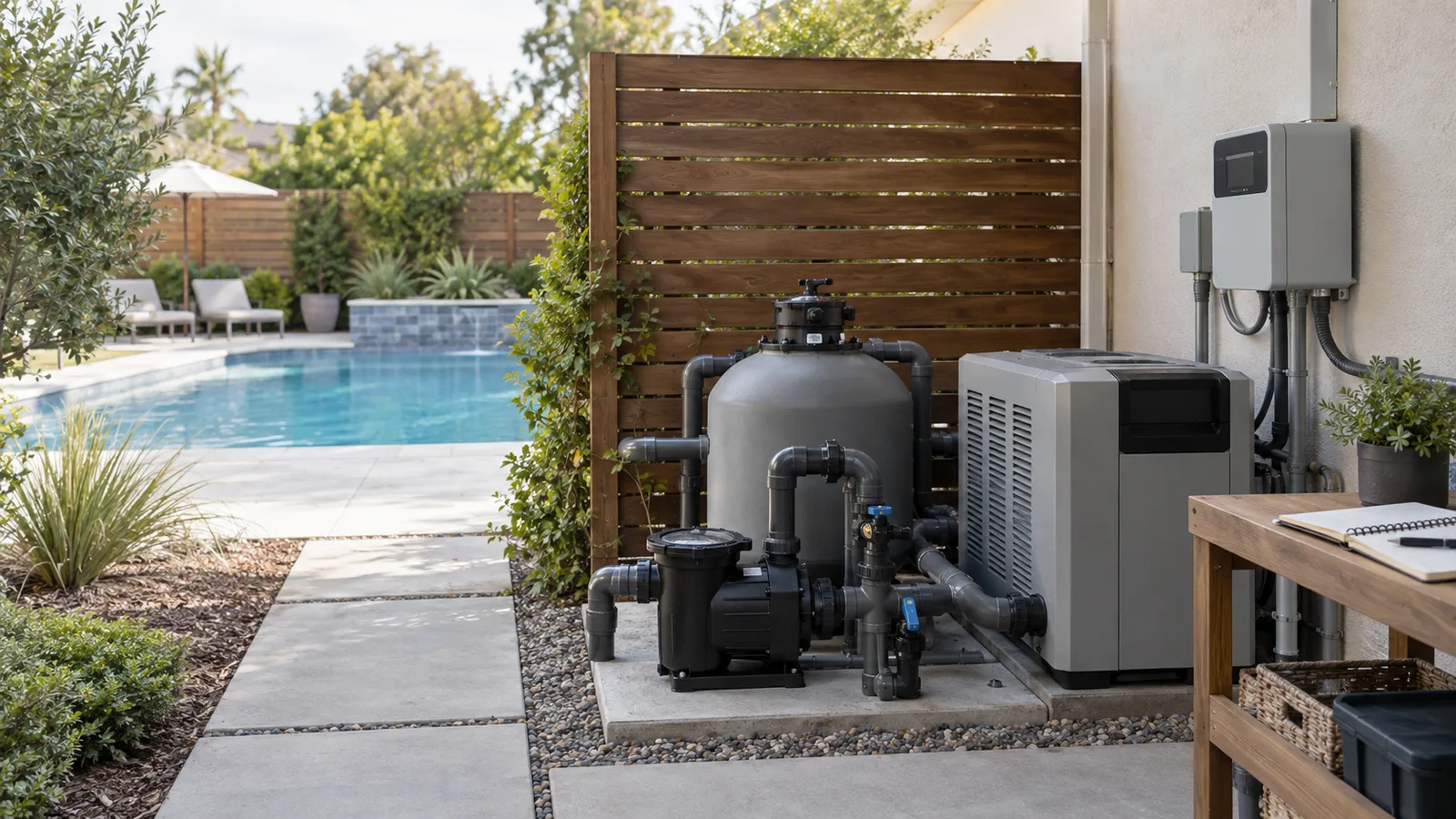
Inventory the existing system
Photograph readable model labels and gather manuals, service records, and any installation drawings. List the pump, filter, heater, controls, and other connected components. Describe the symptom or goal that prompted the project: reliability, easier operation, or better visibility of settings. Give the contractor enough information to assess the system rather than asking for a product recommendation based only on pool size or an old online advertisement.
Ask how the proposed parts work together
Request an explanation of compatibility, the intended operating settings, and any additional work required. Discuss available space and maintenance access, not just whether the product physically fits. Ask who handles electrical or other specialist connections. Keep the proposed model numbers in the written scope. If a substitute is offered later, compare its relevant characteristics before accepting it rather than assuming a similar-looking product serves the same purpose.
Examine operating assumptions
ENERGY STAR identifies variable-speed operation as a way certified pool pumps can match different pool functions. That does not give a property-specific savings forecast. Ask the installer to explain the proposed schedule, settings, local electricity assumptions, and any impact on other components. Compare projected costs using the same usage pattern. Avoid changing safety-critical settings yourself merely to reproduce a general efficiency example.
Make commissioning part of the purchase
Ask for setup, demonstration, manuals, and warranty registration responsibilities to be included in the scope. Record the agreed settings and the person to contact if performance differs from expectations. For connected controls, clarify account access and what still works when the network is unavailable. Keep the model and serial information in your home records. The useful upgrade is one that is correctly matched, installed, and understood after the installer leaves.
Ask for a commissioning plan
A box of new equipment is not a finished upgrade. Ask who checks plumbing, electrical supply, automation and any heater or cleaner compatibility before installation. Record the old and proposed model numbers and exactly which related parts must change.
At completion, have the installer demonstrate normal operation, program settings, maintenance access and fault reporting. Save manuals and serial numbers. If the claimed benefit depends on a particular operating schedule, ask for that schedule in writing rather than relying on a product brochure. Confirm whether the installer will remove the old unit and leave the equipment area accessible for future service.
Take this to your next conversation
- Photograph model labels before requesting advice.
- Confirm compatibility and specialist installation needs.
- Keep commissioning settings and support contacts.
Further reading
Official sources provide additional context. The planning framework and questions above are our editorial synthesis.
Put your research to work.
Explore pool repair or start with your location. Confirm services and suitability directly with the business.