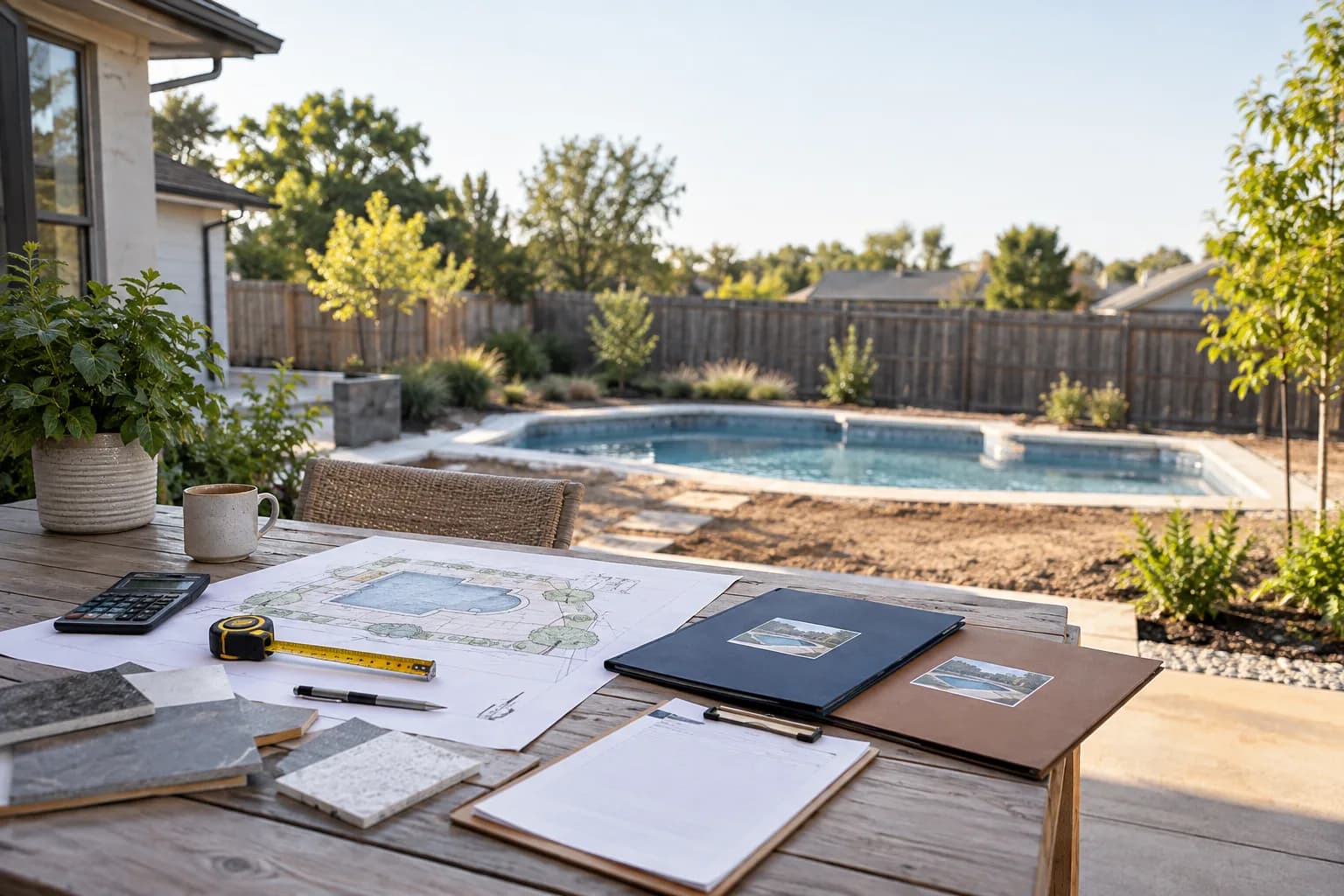
Gather the information you already have
Collect available property drawings, prior permits, equipment documents, and photographs of the yard. Note which documents are current and which are only background. Keep your own observations separate from verified information: a place where water collects is an observation, while the cause needs assessment. Share known access arrangements and any features you intend to retain. Do not move or expose utilities to prepare for a visit; identify the questions for the appropriate professional.
Walk the access route
Start at the street or proposed delivery point and walk to the work area. Discuss gates, tight turns, overhead obstacles, slopes, and places where materials might be stored. Ask who will assess whether equipment can use the route and who restores disturbed surfaces. Photograph existing conditions with the contractor’s agreement. A clear record is useful for planning and avoids relying on memory when several trades later share the same access.
Explain how the yard is used
Show the views from important rooms, existing outdoor seating, and the paths used most often. Describe desired activities and your expectations for care and service. Tell the contractor which decisions are flexible and which would undermine the project if changed. This gives the visit a purpose beyond measuring a pool footprint. Ask whether another specialist should attend a later visit for drainage, structural, electrical, or landscape questions.
Leave with next steps
Before the visit ends, repeat the unresolved questions and identify who will answer each one. Confirm what the next document will include, what information you must supply, and whether there is a design or investigation fee. Send yourself a concise summary while the discussion is fresh. Compare businesses on the clarity of this process rather than the speed of an informal promise. A visit should reduce uncertainty even when it reveals additional work.
Leave the visit with documented unknowns
A useful visit ends with more than a sketch. Record what the contractor measured, which access route it considered, what utilities or ground conditions remain unverified, and which drawings or surveys are needed next. Ask for the person responsible for each follow-up and the expected decision point.
Photograph the proposed equipment area and connections to the house and neighboring surfaces. These details help you compare later proposals that may place supporting work in different scopes. Avoid accepting a firm total based on a site assumption neither party has tested.
Take this to your next conversation
- Collect available property and equipment records.
- Walk the full delivery and work route.
- Assign an owner to every unresolved question.
Further reading
Official sources provide additional context. The planning framework and questions above are our editorial synthesis.
Put your research to work.
Explore pool builders or start with your location. Confirm services and suitability directly with the business.