Compare actual layouts
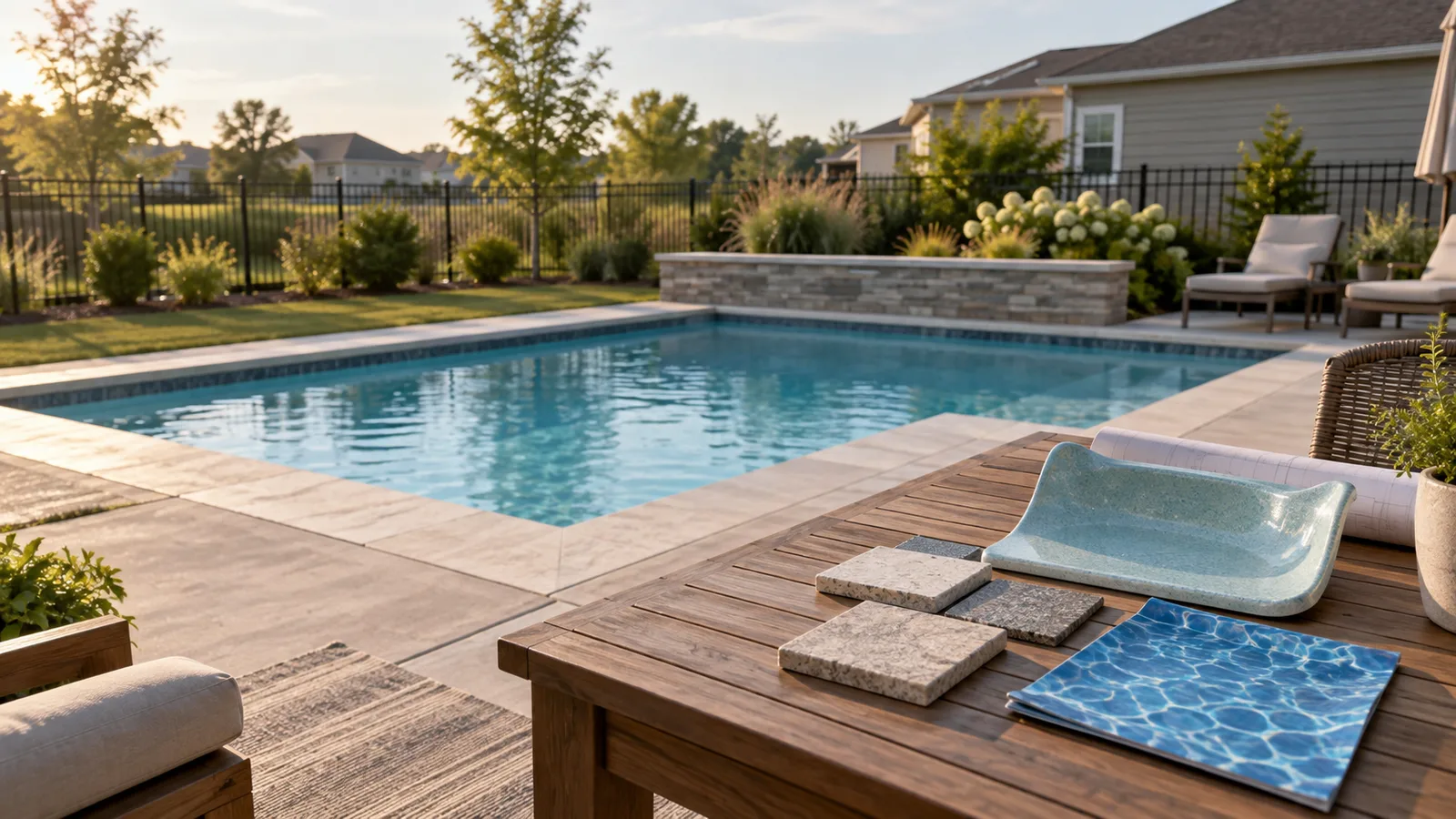
Collect the proposed dimensions, usable swimming area, depth changes, steps, seating, and entry details for each option. Two pools with the same outside footprint may offer different space for the activities you want. Ask for a drawing that shows the water area and surrounding clearances. Walk through how people will enter, rest, and move around it. Focus on the proposed product or design rather than a broad claim about every pool made from a material.
Discuss installation logistics
Ask each installer to explain what arrives at the property and what is constructed there. Clarify delivery routes, equipment access, staging, and any temporary changes to fences or landscaping. If a proposal involves a manufactured shell, discuss the actual delivery plan. If it involves substantial construction on site, discuss sequencing and access duration. These are practical differences to document; they do not establish that one method is automatically faster on every property.
Ask about the complete care plan
Request the care instructions that apply to the specified finish and equipment. Ask what changes the appearance over time, how damage is assessed, and who performs repairs in your area. Discuss future work such as finish renewal or liner replacement where relevant to the proposed system. Avoid treating a generic lifespan claim as a warranty. The written warranty, its exclusions, and the availability of service are more concrete things to compare.
Use the same decision criteria
Score each proposed option against your priorities: layout, site fit, appearance, daily use, upkeep, local support, and complete installed scope. If an option misses a priority, ask whether it can be adapted and what that changes. Keep price comparisons tied to matching equipment and surrounding works. You may find that the quality of the specific design and installer matters more to your decision than a general material ranking found online.
Compare constraints, not stereotypes
Fiberglass uses a manufactured shell, so model dimensions and delivery route are early constraints. Concrete allows a site-specific shape but puts more weight on drawings, construction sequence and selected finish. Vinyl-liner systems require clear specification of the wall, floor, liner and fittings, including future liner service.
None of these descriptions establishes a universal installed price, schedule or lifespan. Site access, local labor, chosen features and the complete surrounding scope can change the comparison. Ask each contractor to show the exact proposed system and the property assumptions behind it.
Use the same comparison worksheet for each type
For every option, record usable water dimensions, stairs and benches, depth profile, access plan, excavation and drainage, equipment, utilities, barriers, decking, finish care, warranty responsibility and local service availability. This reveals whether an apparently cheaper proposal merely excludes more work.
Take this to your next conversation
- Request drawings with usable water dimensions.
- Document delivery and construction access.
- Read care instructions and written warranty exclusions.
Further reading
Official sources provide additional context. The planning framework and questions above are our editorial synthesis.
Put your research to work.
Explore fiberglass pools or start with your location. Confirm services and suitability directly with the business.