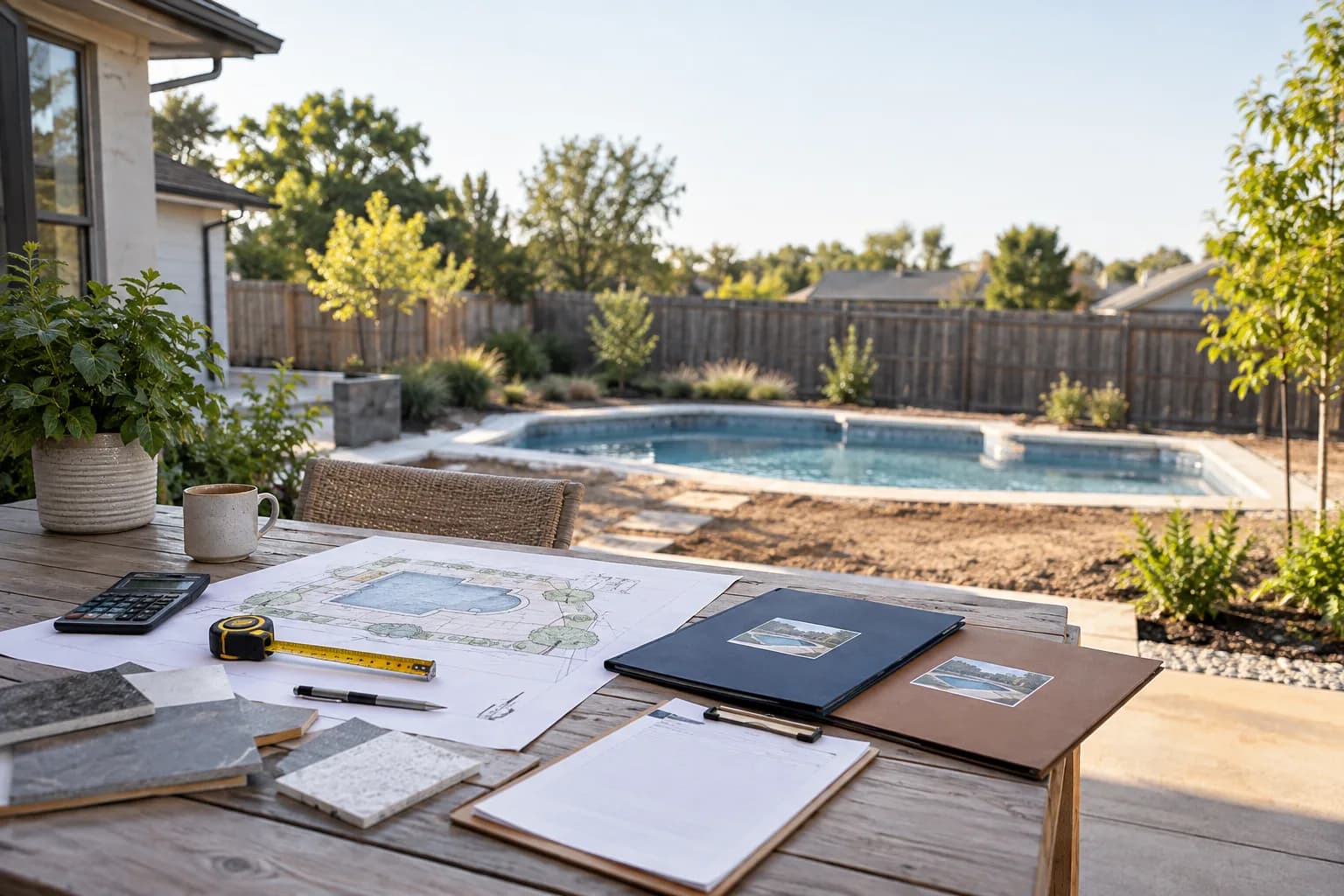
Document the existing pool
Record the pool structure, finish, coping, deck interfaces, fittings, equipment models, leaks, movement, staining, rough areas, and prior repairs. Add dated photographs and note when each concern first appeared. A finish selection should follow the assessment of underlying conditions rather than replace it.
Ask which observations require leak detection, structural review, electrical work, plumbing investigation, or another specialist. Keep diagnosis separate from a contractor’s proposed remedy so competing scopes can be compared fairly.
Separate repair, function, and appearance
Create three lists: defects or deterioration to address, functional changes such as entries or equipment, and appearance choices such as tile or color. This prevents decorative upgrades from obscuring necessary work. It also makes optional items easier to postpone without losing the core repair scope.
When changing depths, steps, ledges, drains, lighting, or barriers, ask what design documents, approvals, and inspections apply. Existing construction does not automatically exempt new work from current local requirements.
Compare the complete renovation scope
A proposal should explain draining, demolition, preparation, repairs, finish system, curing or startup, water handling, equipment changes, utility work, coping and deck transitions, debris removal, access protection, permits, and exclusions. Ask how hidden conditions will be documented and priced before additional work begins.
Request exact product and finish information with manufacturer instructions. Compare workmanship and product warranties separately, including exclusions, claim contacts, and the party responsible for startup chemistry or finish care.
Plan handover and future care
Collect current manuals, serial numbers, valve labels, programmed settings, finish-care instructions, startup records, warranty contacts, and final inspection documents. Clearly archive manuals for removed equipment so they cannot be mistaken for current instructions.
Agree on the first follow-up point and the process for reporting concerns. A useful closeout identifies unresolved items, who owns each action, and when it should be completed.