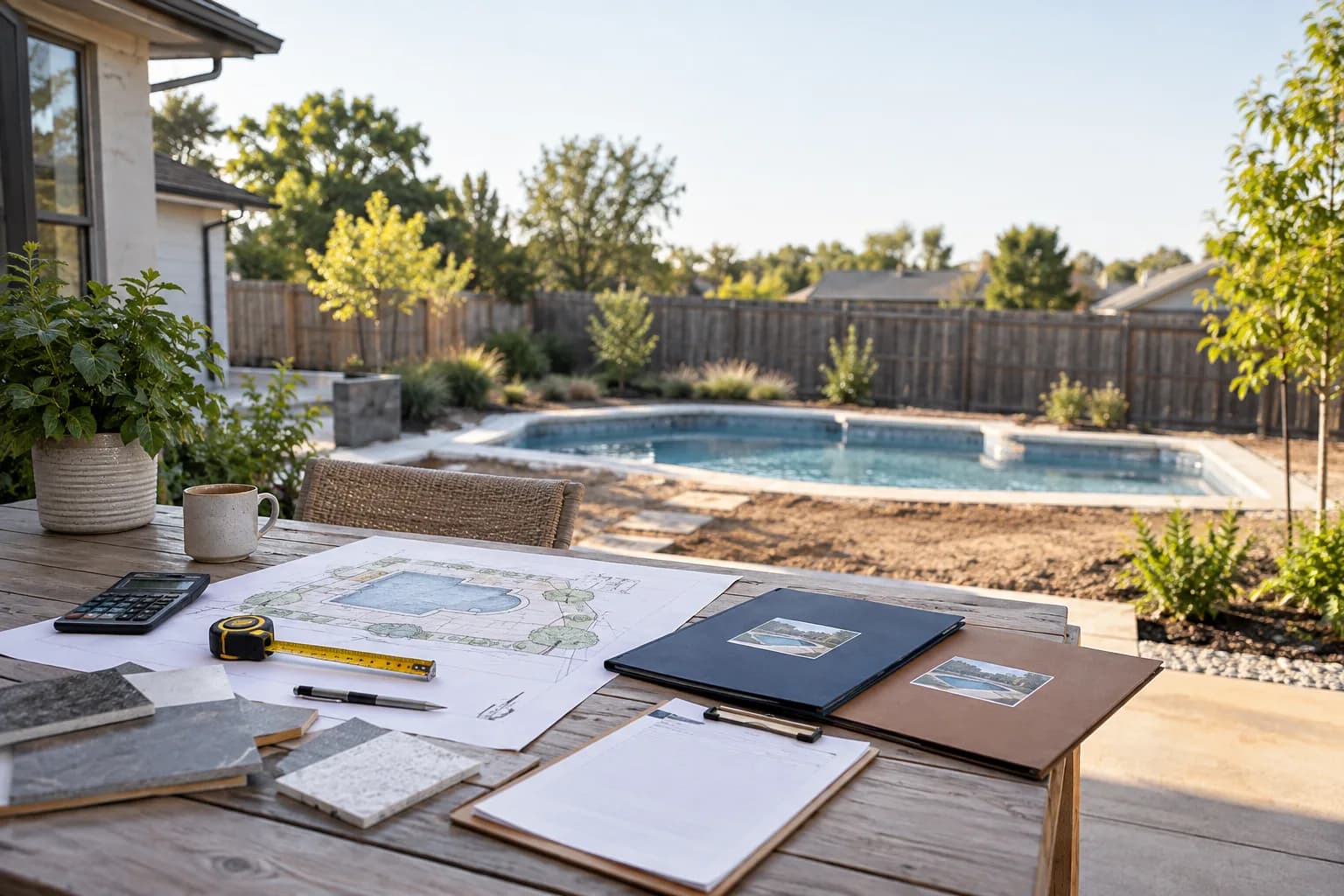
Document the existing pool
Gather the equipment list, available construction records, repair history, and photographs of the areas you want assessed. Describe symptoms plainly: when they occur, what changed, and what you have already tried. Do not label an unexplained issue as merely cosmetic. Ask the contractor what further investigation is appropriate and what can be established during an initial visit. A documented starting point makes competing remodeling ideas easier to evaluate.
Rank function before appearance
Write separate lists for concerns that need assessment, features that do not work for you, and visual preferences. Explain why each item matters. For example, an awkward entry and a dated tile color are different types of problem even if both affect your enjoyment. Ask which tasks should be coordinated and which can stand alone. This prevents a surface refresh from being mistaken for a solution to an unresolved underlying condition.
Coordinate the whole scope
Discuss how proposed work affects equipment, plumbing, decking, barriers, and landscaping. Ask what must be removed, protected, or restored and who carries out each part. If several businesses are involved, identify the person coordinating their sequence. Compare proposals using the same boundary of work. A focused remodel can be a good decision, but the exclusions should be deliberate and understood rather than discovered after the work has started.
Plan the return to use
Ask for instructions specific to the new finish and equipment, including any professional startup process. Request the handover documents and contacts for follow-up questions. Keep before-and-after records of the scope, not just photographs of the result. Review any remaining work with the contractor before treating the project as finished. The useful outcome is a pool whose changes you understand, with a care plan suited to what was actually installed.
Sequence work to avoid paying twice
A cosmetic upgrade can depend on prior repairs. Ask what must be inspected before resurfacing, tiling or replacing coping, and whether equipment changes will disturb completed finishes. Record any signs of leakage, movement or chronic water-quality trouble and request a diagnosis rather than assuming a new surface solves them.
Discuss how the remodel interfaces with the deck, drainage, electrical work and current barriers. Identify the trades and approvals for each. This sequence makes it easier to separate essential remedial work from optional visual improvements.
Take this to your next conversation
- Separate symptoms from proposed solutions.
- Identify dependencies between trades.
- Get finish-specific startup and care instructions.
Further reading
Official sources provide additional context. The planning framework and questions above are our editorial synthesis.
Put your research to work.
Explore pool remodeling or start with your location. Confirm services and suitability directly with the business.